
Balenciaga, The Trickster: After the End of Fashion
Updated: Aug 2, 2022
Balenciaga, the Trickster: The Post-Modern Sweetheart of the Fashion Industry
Jean Baudrillard, one of the most controversial philosophers of the 20th Century, and a name synonymous with “postmodernism,” once theorized that our hyper-mediated time is one where objects represent endless simulacra, repeating copies of copies, simulations of simulations, in which the original object has been lost. A file on the internet, for example, is one that is passed on in many ways and different formats, sweeping into oblivion any trace of originality. The age of the internet is one of nauseating reproducibility, imitation, simulation and breakdown of the original reality of signifiers. A signifier is any object or symbol that we can attach different meanings depending on the context. Anything, any word, any concept, any political slogan, can be repackaged on the internet, in the form of a tweet, video or meme, and be made to signify the opposite meaning that its original intended, indicating the post-ironic mood of the internet. Furthermore, whoever encounters this new simulacra has no idea whatsoever whether there even was an “original” object in the first place. In fashion, nobody embodies this hallmark of postmodernist philosophy more than the recently-rebranded French sweetheart Balenciaga. Balenciaga developed from mid-2010s on as an endless, witty play with the simulacra of signifiers that define internet culture and the post-modernist, identity-dodging generation behind it.
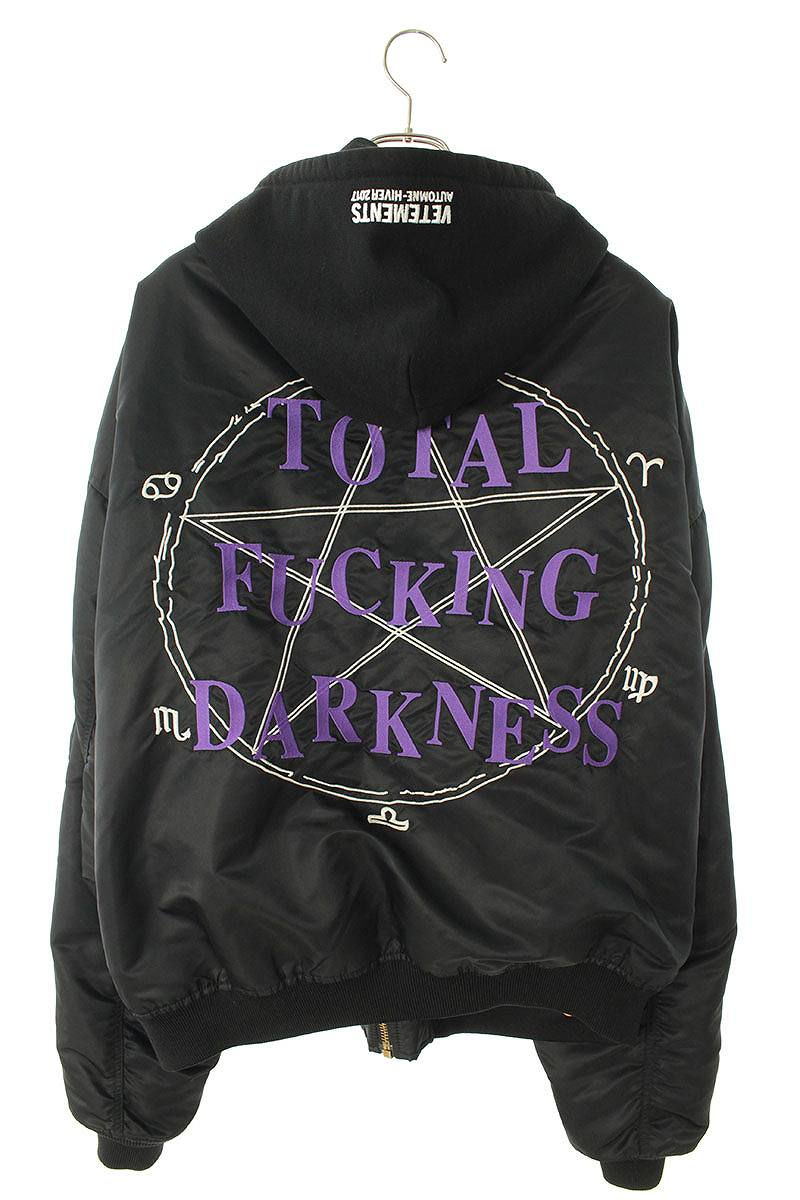
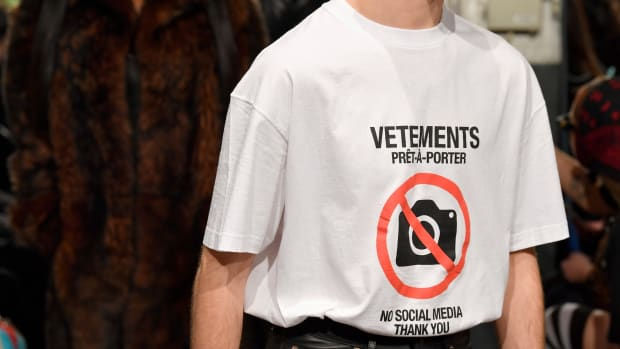
Demna Gvasalia, who is the mastermind behind Balenciaga’s transformation, first gained notoriety with his brand Vetements. Vetements is a brand that relies on a dark aesthetic, borrowing from metalhead culture, punk, pop culture and the literal simulacra (copies) of other brands (such as DHL??). Vetements embodies an anarchic post-modernist spirit that can be rightfully interpreted as the antics of a sardonic fashion designer taking the piss on its costumers and charging $1000 for a hoodie full of pentagrams and the words “total fucking darkness” inscribed on it. The jokey, fun nature is part of the appeal, but it is hard not to see that the joke is many times on the customer, for unironically paying exorbitant prices for these items of status which would have no value whatsoever had it not been for the rise of post-modern art (the forefather being Andy Warhol, whose connection to all this will be explained in the last section). But, when not making the clueless consumer the butt of the joke, Demna actually is making some interesting statements on the nature of status, on valuing and on post-modern fashion. In short, fashion status in post-modernity, much like artistic value in contemporary art, is whatever the hell we choose to make of it. Balenciaga is evidence that fashion is not at all about aesthetics, about what meets the eye, but about the range of significance we can attach, unravel and reattach into signifiers (the clothes).


Charting the rise and development of haute couture far exceeds my patience for research on the topic, but it is clear that what Balenciaga is doing today is something that, though with a couple precedents (Demna was a student of Margiela, another designer well-known for endless provocation and artful ridicule), has never been developed so successfully and also with the ability to connect so much to the newer, media-bred generation. Where other avant-garde fashion designers were largely considered outcasts in a world that values class perhaps more than any other, Demna was able to transform Balenciaga into the definitive artistic statement of Gen Z fashion lovers. This partly explains Balenciaga success in repurposing the most unimaginable signifiers into high fashion: motorbike aesthetic, destroyed items, The Simpsons, Playstation 5, and (goddamn Demna) Fortnite, to name a few. Balenciaga laughs at these repackagings just as much as the people who meme them into oblivion whenever the newest wild Balenciaga item drops, mocking them as if they were not intentional. Where people see a memeable joke, Balenciaga sees free, endlessly repeatable advertisement, a process that generates even more wild and more chaotic free play of signifiers than the simulated item intended. It is clear that Balenciaga would be nowhere without social media and its vapid, shape-shifting culture.


When the new Balenciaga was coming into its own under the helm of Demna, they were posting some wild pictures on their Instagram. If you search “Balenciaga weird pictures” on Google a slew of articles will show up trying to decipher what the hell was going on in the brand’s feed at the time. Every post had an “off” kind of aesthetic: some were brutalist, some were mundane, some were obscure, some had a specifically post-Soviet apocalyptic vibe, some were provocative and most of them were just weird. This was Balenciaga playing with the notion that haute couture is intrinsically tied to any kind of “money” aesthetic, be that aristocratic, or elegant, or fine. While most haute couture brands will go very far to distance their brands from any kind of “commoner,” “average citizen” aesthetic, Balenciaga fully embraced that, with a weird twist. Balenciaga was not afraid not only of being associated with people using their clothes for grocery shopping, but they also embraced the bizarre nature of how status is attached to fashion in postmodernity. Balenciaga, the trickster, is laughing at everyone and making them confused in the process. Demna instated the same philosophy he had at Vetements when he came to Balenciaga, which is to approach fashion with absolute seriousness and irony at the same time, and repurpose anything he finds in front of him (crocs, running shoes, gamer culture, emulating other logos, “dad” clothes, drug references, self-referentiality). By repackaging this under the Balenciaga name, we are forced to reevaluate all of these symbols as “high,” as deserving of the label haute couture. This is a razor-sharp observation on the nature of status, showing that in post-modernity, conferral of status is not done exclusively by those who possess the most money and power, but also by those who are able to share information more rapidly and provocatively than others, creating trends, generating desire, and, most importantly, hype.



Besides being attuned to internet culture and being a direct product of new media, such as Instagram, Balenciaga basks in its identity as the post-modernist fashion brand par excellence. With their Fortnite collab, they launched not only physical items but also digital ones. Balenciaga has also been the first haute couture brand to express desire to be fully integrated into the metaverse. More than just showing the sarcastic overtones with this incisive commentary, Balenciaga also fully embraces its role as the fashion deceiver, the counterfeiter who is able to sell for more than the original. Vetements even has its own parody, a meme-clothing collective called Vetememes. Demna is aware that this virtual presence is much more valuable today than any physical presence in the world’s prestigious 5th Aves or Champs-Élysées. Where Vetements destabilized the hierarchy in the binary between streetwear and haute couture, what Demna does in Balenciaga is to destabilize the same binary but from the position of a haute couture house this time. In addition to this, Demna destabilizes the dissemination of fashion through the rarefied spaces of galleries and fashion shows and turns it into a virtual process. The ability to interpret the brand through this kind of Derridean, deconstructionist analysis further solidifies Balenciaga’s status as a direct product of postmodernity.

By making fashion virtual, which is a form of expression that is by definition wearable, Balenciaga is able to gain the hype necessary to make its mimetic experiments so successful. Even in Baudrillard’s scheme, the simulacra is presumably something that loses its original reality, its value, over time. Balenciaga’s genius lies in its being able to, with each simulacra, increase the value of items over time. Never would a Van Gogh forger be able to sell his copy for more than the original price. Balenciaga does just that. While a knock-off Crocs or Asics would be sold for 10x less than its original, Balenciaga is able to sell its simulacra for 15x more. Besides, where other haute couture brands try to distance themselves from knock-offs and cheap copies, Balenciaga inverts once again this binary and adds value to the copied product. Copying articles for Demna is a matter of appreciating, rather than depreciating them. The origin or authenticity of objects does not matter anymore, what matters is the significance and status we attach to it, and Balenciaga has tapped into that idea more than any other brand in fashion history.

Demna, who was born in the war-torn nation of Georgia, where he fled as a child, has had one of the most remarkable careers in fashion as of late by taking a lot of signifiers which were far from being associated with any kind of haute couture aesthetic and making these symbols among the most coveted in the world. His position as an Eastern European who is the head of one of France’s most prestigious brands is striking. He was able to transform the idiosyncratic, “lowly” aesthetic of his youth into a luxury behemoth, and all this thanks to the rise of the internet, the breakdown of rigid signifiers, destabilization of hierarchical binaries and meme culture. His operation was one of inversion of status, of deceiving people into believing that symbols that had since been discarded by the high-speed machinery of the fashion industry were still worth of hype, status and adoration, just by the fact that the "Balenciaga" label is attached to it. Who the hell thought Crocs would make a comeback? And sold for 15x the original price? Damn, the world must have gone mad.
All this madness is thanks to the cunning genius of Demna, who has shown again and again an unending ability to provoke, to shock, and to do it with originality and style. His latest was a ploy at the NY stock market, a fashion show unlike any other, which actively laughed at and participated in the capitalistic frenzy generated by the fashion industry. Models using BDSM masks walked the runway, as if to provocatively say that our perversion for money and consumption is not much different than that of a sexual pervert. The connotations of this joke may be positive or negative depending on who interprets it—Demna is far from a moralizing artist, so he will never overtly shame his kinky consumers. But underneath the glossy leather mask there is undoubtedly a subtle grin.

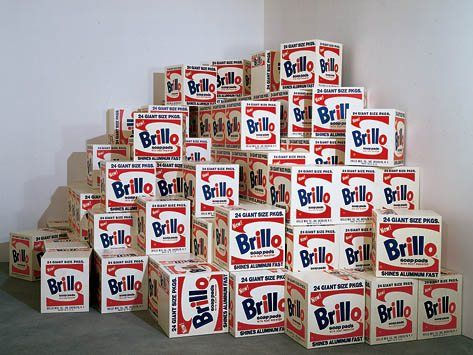
The fetishistic nature of consumption recalls one of the most famous concepts in the history of philosophy and economics: Marx’s fetishism of commodities. Marx understood that one of the most twisted factors about the then-emergent capitalistic system was that people were willing to shell out an exchange value (money) for a commodity (say, clothes) far more substantial than their use value dictated (the use value of clothes is simply to dress oneself). Marx was perplexed at how the rate between exchange value and use value could be so dramatic. Before the advent of capitalism, goods were exchanged mainly based on rarity, demand and amount of work invested in it. Marx saw that capitalism produced a phenomenon which had so far been unknown: the sacralization of products, the imbuing of intrinsic value into mere commodities. Vetements and Balenciaga have mastered the art of fetishization, what Baudrillard also calls consumption through seduction. They have taken items which have very low exchange value in the world of fashion (DHL, PS5), and 0 use value, and they have loaded them with an aura of high status. They have turned pop culture into a fashion statement, much like the Campbell Soup cans and Brillo Boxes that Andy Warhol transformed into art. This is fetishization on steroids, taking everyday, mundane brands and turning them into highly coveted articles of status, turning them into artistic, particularly postmodernist statements. Balenciaga does away with the myth of purification and exaltation in haute couture and replaces it for that of recycling, reusing. Balenciaga turns trash into sacred objects of capitalistic adoration, while at the same time making a post-ironic statement on the endless simulacra in culture.

Balenciaga and the End of Fashion
Arthur Danto, one of the best Philosophers of Art in the 20th Century, analyzed in his book After the End of Art the figure of Andy Warhol as perhaps the most significant artist that represented the “End of Art.” Danto’s argument in the book is complex, but it boils down to using Hegel, who conceptualized “the End of History,” in order to show that Art as we had known since the genesis of Western civilization was coming to an end, due to a shift in what the public perceived as art in response to what the artists were making to take that place. Hegel theorized that History is a socio-metaphysical force that can be broken down into stages. Hegel thought that History would come to an end once it had reached a certain stage of development and self-awareness. Danto utilizes this framework to see that in Art too there is an End. This End is specific to the Western context, where for a long time Art was taken to be whatever accorded to certain guidelines of style and technique. Modernist Art broke with this by proliferating a plurality of style and aesthetic definitions of what Art should be. Warhol, continuing Duchamp’s elaborate jokes, destroyed the notion that art should be anything rarefied or based on pure skill by taking everyday products and putting them in a different context, the museum. Demna does the same when he recontextualizes and repurposes different brands and aesthetics to expand Balenciaga’s chamaleonic definitions of “high” fashion.
Danto sees Warhol as the most prominent figure in this shift, because he was able to complete the revolution started by Duchamp, that which shifted the consideration of an object as art from technical mastery (techne) to institutional factors. Danto sees in postmodernity a breakdown of attempts to define art in any essentialist, formalist or intrinsic manner. This means that art would have no definition based on necessary and sufficient properties. Danto is interpreted as an institutionalist, meaning that Art is where Art is considered to be. This is a complicated way of saying that both we, the consumers, and the players of the Artworld (curators, art galleries, museums), are the ones who decided what is worthy of value, adoration and attention as “Art.” Art is not a label instantiated by any properties, be they technical (as in drawing lines a certain way) or intellectual (as in conveying certain ideas), but only by an intersubjective agreement that is not based on any preconditions. This means anything, even a urinal can be art. What answers to art is judgement, not perception, as Danto, riffing on Hegel, reminds us. This is easily translated into the context of fashion, considered by many an arm of the artworld, though undeniably more tied to mass-consumption and material culture than art is usually taken to be. Demna and Warhol have in common that they fetishize everyday products, icons and aesthetic moods and turn them into objects worthy of adoration, of high monetary and cultural capital value, worthy of aesthetic criticism, and of frivolous blog posts such as this.

This is the sense in which Balenciaga is a worthy candidate for representing the “End of Fashion.” Balenciaga is the final blow in the haute couture industry to any idea of what “real fashion” or “beautiful, elegant, classy clothes” should look like. Balenciaga is a testament to postmodernist ideas of art and fashion, where these are not taken to have any intrinsic properties. Beauty, class, appearance of money and taste, all factors which were always considered as essential to the world of haute couture have all been thrown in the garbage and incinerated by Demna’s provocations with Vetements and Balenciaga.


el autor es un puto, arriba el america